Skip to content

Endless windows

I have always loved the Westville’s shutters, but it didn’t occur to me until this weekend how much work goes into them. So far I’ve spent about five hours sanding, wood filling, and painting, and could conceivably spend another five hours before they’re all done. Luckily a re-watch of My So-Called Life (for the umpteenth time) is making the work a bit more bearable.

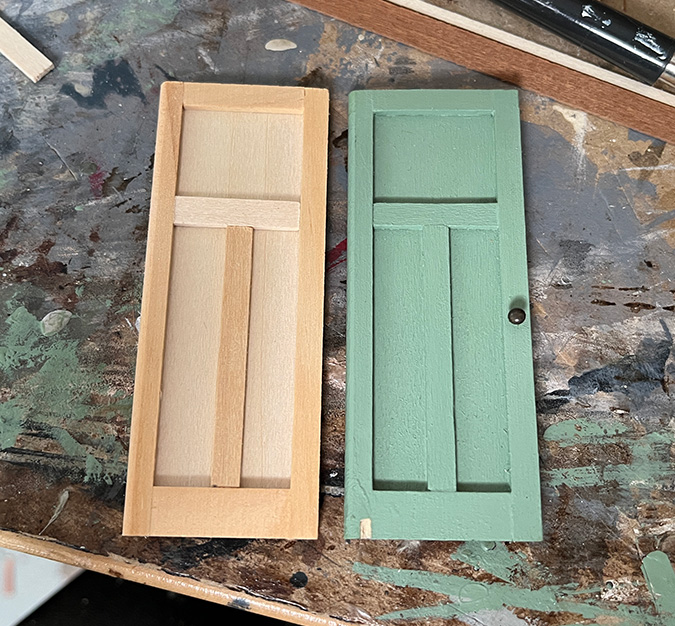
Each shutter has two pieces: a plain back piece and a decorative front piece. I’m painting my fronts white to match the house, and the backs pale blue. When the shutter is assembled, the blue shows through. Altogether I have sixteen shutters, which makes thirty-two pieces to prepare, plus some window trim that I hadn’t done yet. (There are normally eighteen but I made a change to the porch window, so that one will now be shutter-less.)

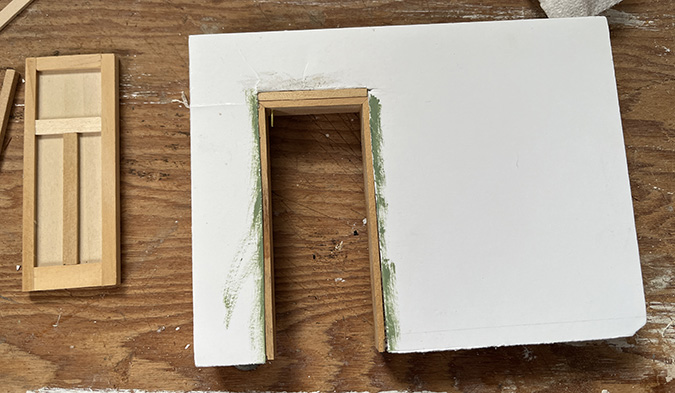
Since the plywood tends to be a bit splintery, each piece needs to be sanded. Then I apply watered-down wood filler to the exposed edges and the surface of the wood to fill in the grain a bit and blend in imperfections. Once that has dried, I sand it again to make it smooth. The picture below shows the pieces after the wood filler dried, but before re-sanding.

Then, finally, it’s time to paint. This afternoon I got a first coat on most of the pieces before calling it a day. When all’s said and done they’ll need at least two coats, maybe three, probably with some more sanding in between. Then I’ll glue the white fronts onto the blue backs, and spread wood filler on the glued-together outer edges to make them nice and smooth, then sand the edges, then paint them…

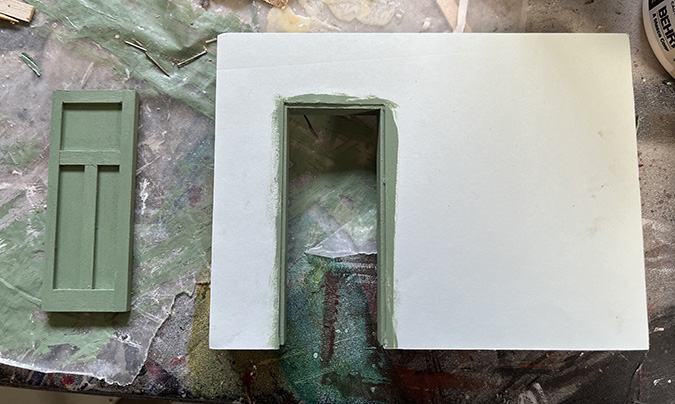
Here’s an idea of how the finished shutters will look.

After this experience, I’m even more eager to try out one of Greenleaf’s new laser cut half scale houses! (Rumor has it there’s no sanding or wood filling required…)

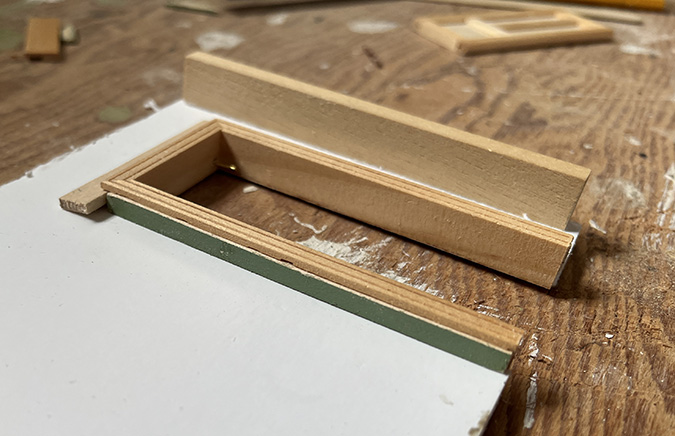
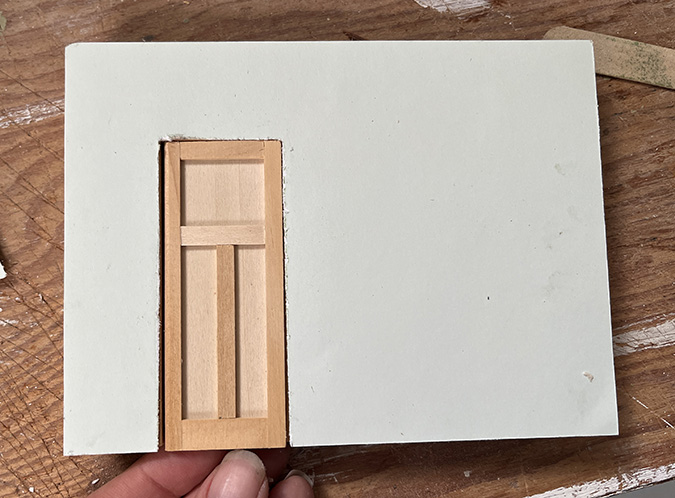
While I was digging through the Westville box to find all the shutter pieces, I pulled out the plastic window inserts and did some playing. My Westville has two Houseworks windows that came with clear plastic inserts: a casement window in the kitchen and a dormer window in the bedroom. The rest windows that came with the house have a design on the plastic and I wanted to use leftover plastic pieces (from the porch window, small rectangular windows, and front door that I’m not using) to make the Houseworks windows look more like the others.

As luck would have it, the porch window and the dormer window are exactly the same width, so I’ll be able to use the plastic intended for the porch window in the dormer. (The window trim hasn’t been painted yet; it will be white like the rest of the windows.)

Here are two options for the casement window. I haven’t decided yet if I’ll do one of these or just keep the plain inserts that came with it.

Categories: Dollhouses.

Tags:

The ‘I love you’ egg

Still working my way through the eggs I’ve collected from my neighbors’ hens this summer. This morning I must have broken the yolk when I cracked the egg into the toast, because this was the result.

Then I flipped it over and my heart-shaped yolk turned into a big mess. (My writer self can’t help but think that’s a metaphor in the making.) It tasted good though.

Categories: Thoughts.

15 Days review posted at Adventure Gamers


Hey, wait a sec… where did August go?

I’ve been picking up a lot of freelance work the past few weeks, which is part of the reason the blog’s been silent. Also: no dollhouse progress, very slow tomato progress, Rosy hasn’t done anything particularly noteworthy. (Well, other than being her adorable little self, of course.) But now the plummeting traffic chart on my Google Analytics account can breathe a deep sigh of relief, because today my review of 15 Days went up at Adventure Gamers, so I finally have something to talk about.

Errr… that’s about it. Go read it.

Categories: Games, Writing.

Lights that work

Electrifying a dollhouse is one of my most dreaded activities, and I’m not sure why. It’s not really that difficult, and it’s not messy, and nothing beats the satisfaction of flipping a switch and seeing the lights go on. Of course, if you flip the switch and the lights don’t go on, that’s when it starts to get frustrating. But luckily that didn’t happen to me (much) as I electrified the Westville this weekend.

(None of the ceiling lights are glued in yet—that’s why they’re all crooked!)

I use tape wire and in most cases hard wire the lights using a technique explained to me by the people at Dollhouses, Trains, and More back when I was building the Orchid. For ceiling-mounted lights, drill a hole in the ceiling and run the wires up to the floor above. (Same concept applies for wall-mounted lights, although the Westville didn’t end up having any.)


Next, strip the ends of the wires and wrap these around the pointy part of a pilot hole punch to create a loop. Wrap the wire around several times so there will be plenty of contact points. Then slip a brad into the loop and push the brad into the blue side of the tape wire. Repeat for the second set of wires, this time pushing the brad into the pink side. (Sorry I didn’t take any pictures of this part. Hopefully you can visualize it!)

I generally poke a hole in the tape for the brad to go in first (again using the pilot hole punch), and once it’s inserted into the hole, I push it in using the back end of the punch. Once I’ve confirmed that the lights work I put a piece of Scotch tape over the brads to keep them from wiggling around.

For the table lamps, I either hardwired them into the floor (eventually the wire will emerge from behind the baseboard, as if it’s plugged in), or used an outlet. The outlets are bulky so I only put them where they can be easily hidden. For now, there’s one in the bedroom under the dresser… but I may change my mind and hide it in the closet instead. I also put an outlet in the attic and will hide it behind a box or something.

I bought several of the Westville’s lights this weekend, but some I’ve been holding onto for a while. The kitchen lamp is one I bought back when I built the Orchid, and decided not to use then. The arms holding in the shade are very delicate and have snapped off several times over the years, but thanks to Super Glue I *think* they’re going to hold. The bulb in this lamp (and many of the others) can be unscrewed and replaced if needed.

The fixture for the second bedroom, which will be a girl’s room, has a neat ornate metal base but it was originally white, which would have been impossible to see against the ceiling. Before installing it I painted it blue, which I think will go nicely with the wallpaper I’ve picked out for this room.

The porch light is another one I’ve had stashed for a while. It originally hung from a chain but I removed the chain so it wouldn’t hang too low in the space. I’ve always thought the orange shade was kind of funky for indoors, but it works well outdoors. I think I’ll cover the porch roof with a thin piece of wood or cardstock to hide the wires. The porch trim isn’t glued in yet; I just put it in there temporarily to see how it would look.

With electricity out of the way, I’ve started shingling. I wanted octagon shingles rather than the fishscales that came with the kit, so I bought these cedar shingles. So far I’m pretty underwhelmed by them, which is disappointing considering the hefty price. They’re thick, which makes them awkward to overlap, and for some reason my stain job came out shiny. (That could be my fault—I remember making a bit of a mess with the stain and being lazy about wiping it off as the shingles dried—but whoever’s to blame, I’m not thrilled about it.) I’m sure the house will look fine in the end but I probably won’t use these again.

Here’s what I’ve done so far, in about an hour and a half of work. I’m using Quick Grip this time instead of hot glue and it seems to be working out fine, but I think I’ll go through the tube pretty quickly…

Now that I’m thinking about it… why are these called octagon shingles? They don’t have eight sides. But I guess they would if they were symmetrical. Just one of those mysteries of the universe…

Categories: Dollhouses.

Tags:


home | dollhouses | writing samples | clients | contact