The Den of Slack

emilymorganti.com

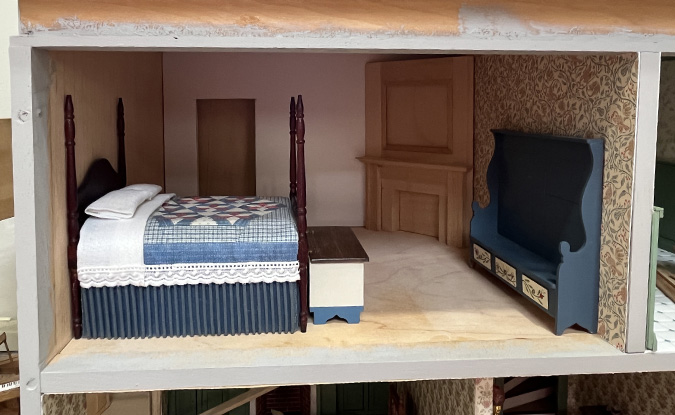
Mansard nursery floor

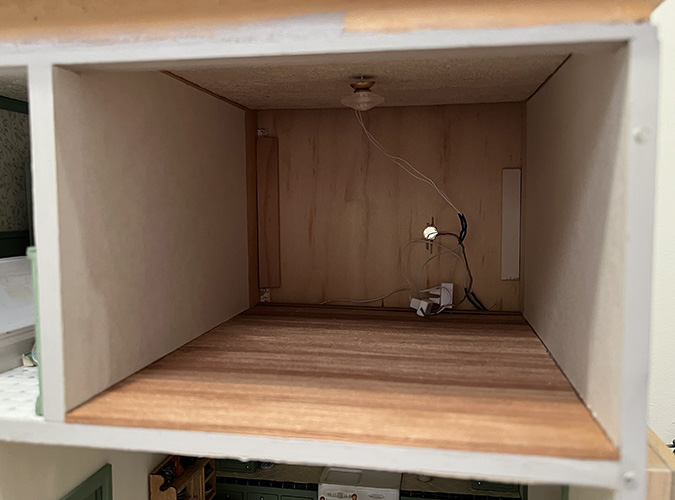
With the kitchen electrical finished, I can now lay the floors in the nursery upstairs. The wires from the kitchen lights come up through the floor. My original idea was to leave a slight gap at the sides for the wires to sit in and cover that gap with baseboards.

But when I started playing with it, I found the white wire coming from the middle of the room was too bulky for the floorboards to lay flat on top of it. On to Plan B: a subfloor made of cardboard.

And then I noticed that the bathroom wall isn’t quite flush at the bottom. The front edge of the cardboard needs to be covered with a piece of trim anyway, so I thought about extending the trim piece all the way across the gap at the front of the wall. But this would have been inconsistent with the other walls and would probably look weird.

The wall is flush at the top, but the bathroom wallpaper sticks out a bit, which also bugged me.

I decided to kill two birds with one stone (sorry, birds!) by adding a piece of thin basswood to the front edge of the wall. This mostly gets rid of the gap at the bottom.

And it takes care of the sticking-out wallpaper at the top.

I used the belt sander to make the back of the basswood piece thinner at the top, so it won’t stick out quite as much where it meets the trim piece above. It still does stick out a little, but it’s is less egregious than the gap at the bottom was.

While the paint on that new wall piece was drying, I glued the cardboard to the floor. It’s spaced slightly away from the front edge to accommodate the piece of trim that will hide the edge of the cardboard.

Continue reading

Kitchen electrical complete

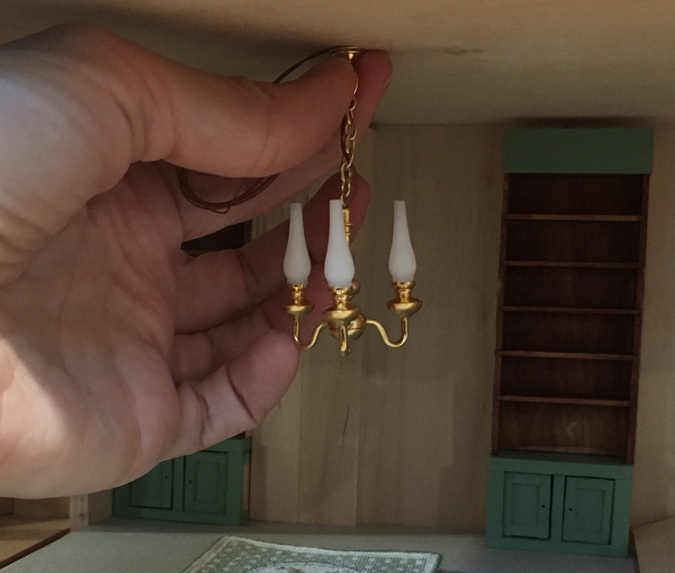
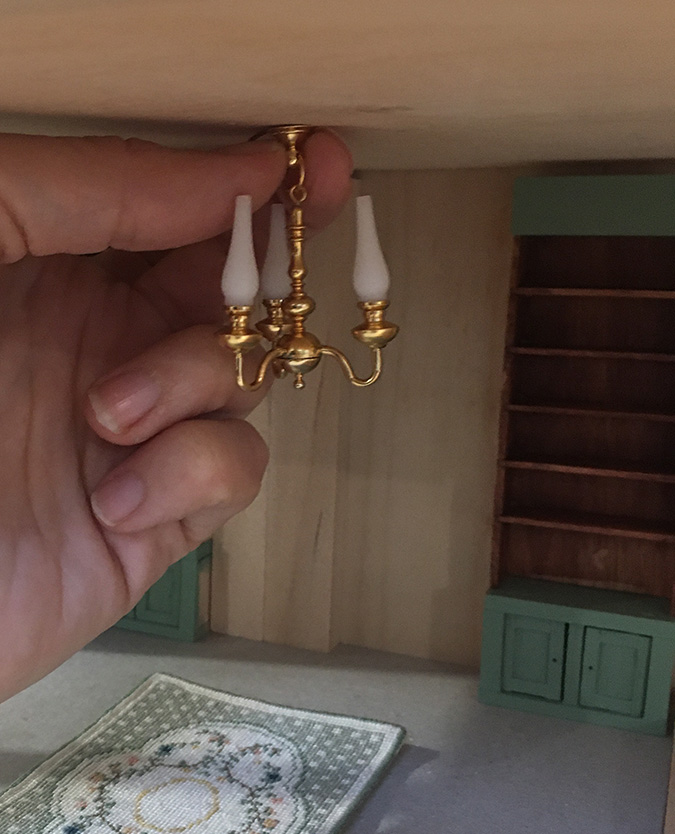
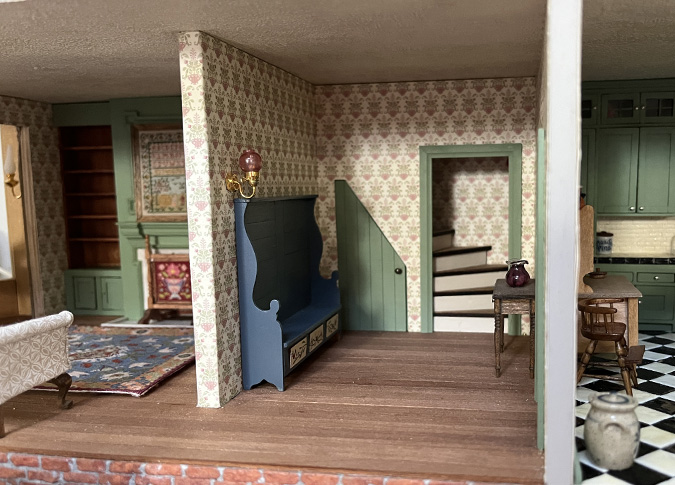
Before I move on to the Mansard Victorian’s nursery, here’s a quick post to show how I finished the electrical in the kitchen. There are three lights in here: a ceiling fixture, a bulb in the hood, and a bulb over the sink.

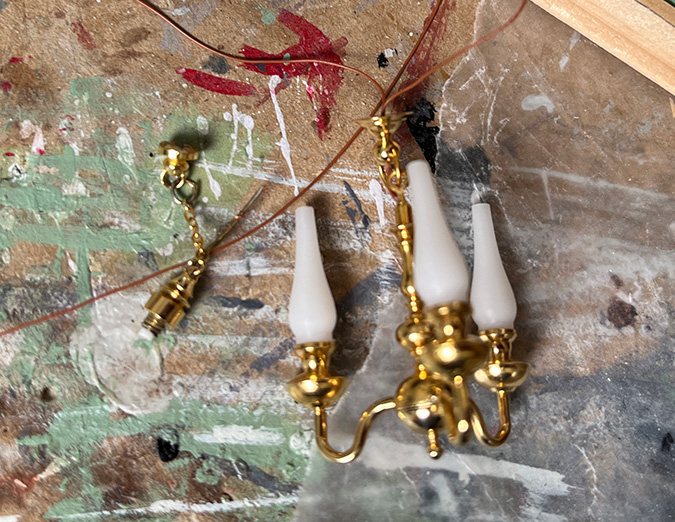
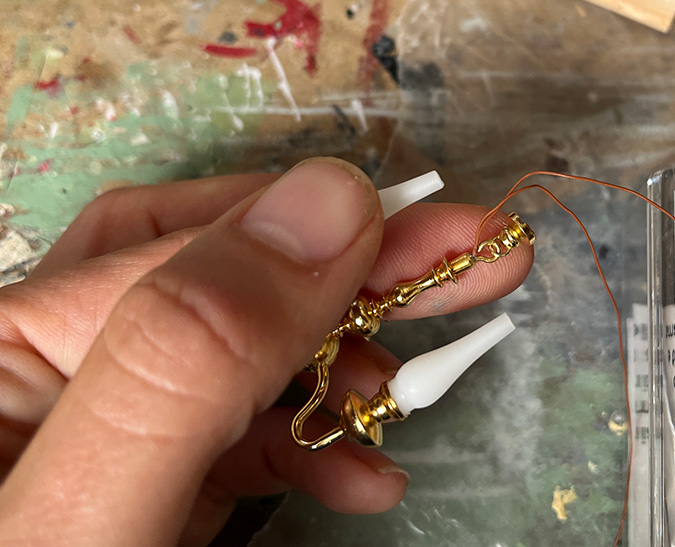
I made the ceiling fixture by combining the base of a table lamp and the shade of a hanging lamp. The ones in the picture below aren’t the ones I used — I had these pieces lying around after using the table lamp shade in the Queen Anne Rowhouse, and after the hanging lamp broke in the Gull Bay Cottage. (Proof, yet again, that nothing should be thrown away, ever… even if it’s broken!)

I painted the base with metallic paints to make it less shiny and more antique looking. If I took pictures at the time, I can’t find them now, but it’s the same paint I used to de-shine the bathroom light.

The shade had a little black dot on it that unfortunately faced front with the light positioned so you can see the little key sticking out of the base (which I wanted to be able to see). Also I wondered if I could make it look more like milk glass by painting it with white Gallery Glass paint.

As it turns out: no, I could not. Wayyy too gloppy.

Fortuitously I’d recently purchased two more of these hanging lamps on eBay. Clear Gallery Glass might have worked better than the white, but I didn’t want to ruin another shade experimenting with it, so I coated the new one with gloss varnish instead.

Here’s the gloppy one. Not great.

And here’s the gloss varnish version. It’s not very shiny, but it looks clean and doesn’t have that black dot on it, so I’ll take it.

(And no, of course I’m not going to throw the gloppy one away! What if I need it for something ten years from now?)

Continue reading

Finishing the sink area

Back in August, I thought building a cabinet for the Mansard Victorian’s kitchen sink would be a quick diversion before I dove into finishing the nursery. Little did I know it would take me the rest of 2025 to finish. Daisy’s gift to me was spending three hours calm in her crate today while I (mostly) finished the project — it’s a Christmas miracle!

The first task on the to-do list was to hide the cracks of light showing above the upper cabinets.

Since covering the top of the cabinet with crown molding hadn’t worked, I decided instead to build a fake ceiling in front of the cabinet. I found a piece of wood thick enough to cover the crack.

Like with the crown molding, you can see light over this. The opening isn’t square and because of how the bump-out is situated, I just couldn’t figure out why the wood wouldn’t fit flush with the ceiling.

But that’s okay, because now the crack will be hidden by the trim.

I covered the wood with a piece of the scrapbook paper I used on the walls, wrapping it around the end to make sure no bare wood would be visible.

The edge is a bit sloppy, but it’ll be covered up.

Continue reading

« Older posts

© 2026 The Den of Slack

Theme by Anders NorenUp ↑